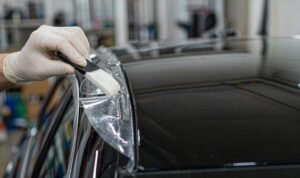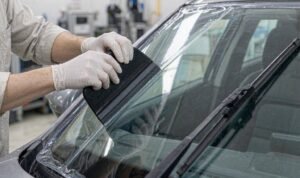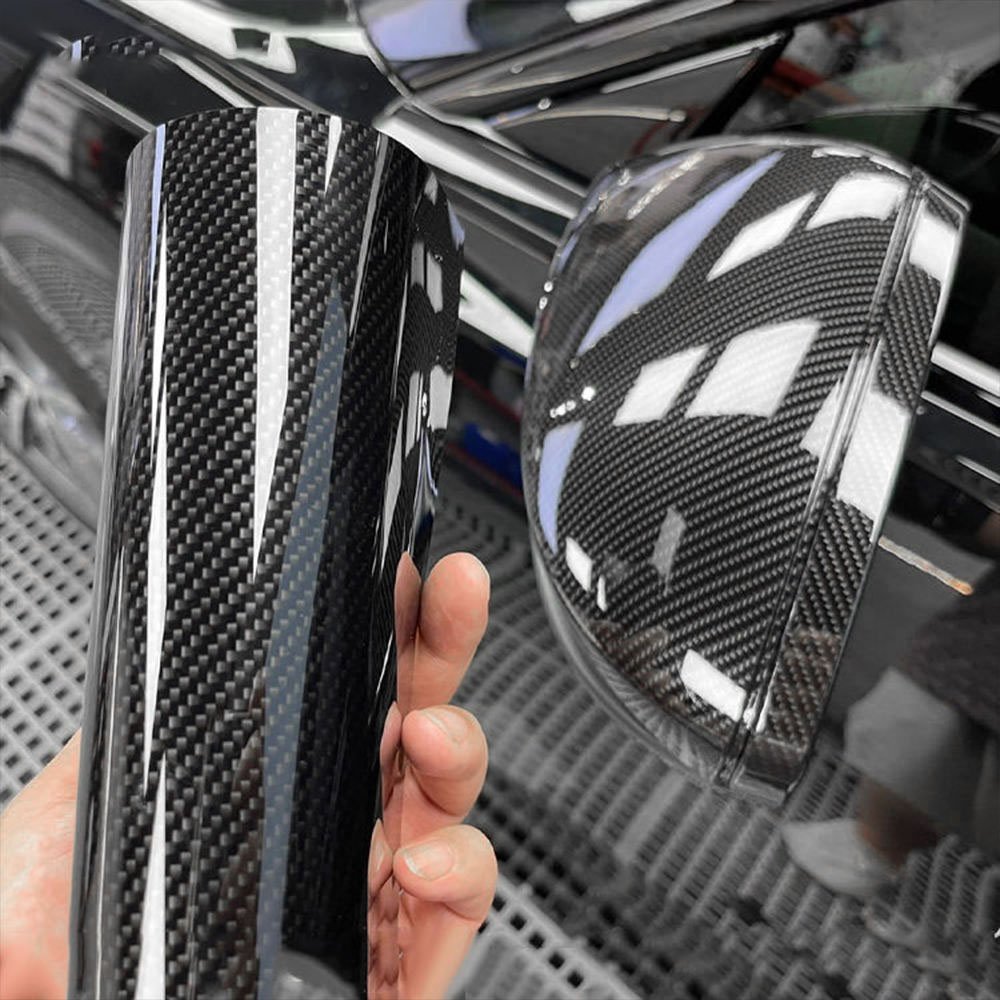
A matte grey performance SUV rolls into the shop for full-front protection. The installer quotes it like any other car, loads the plotter with gloss Clear TPU PPF, and four hours later the owner walks in and stops cold: the hood that was dead-flat now shines like satin. The film comes off two weeks later, and the sheen change is still there. The only fix is a respray of the hood and both fenders, and factory matte repaint is the hardest color process in the booth — one panel plus blending routinely lands between 800 and 1,500 USD, sometimes the whole car.
This is not bad luck. It is a skip in the pre-quote check, and it happens because almost nobody trains installers on what “matte” actually measures. The good news: it takes two instruments and ten minutes to never make this mistake again.
Matte Is a Number, Not a Look
Factory matte paint — BMW Frozen, Mercedes magno, Audi Daytona matt, factory satin vinyl from the OEM line — gets its flat appearance from surface micro-texture, not from a different pigment. The clear coat is engineered with a fine roughness that scatters light in all directions. A standard gloss meter reading at 60 degrees (ASTM D523) puts most of these factory finishes between 2 and 10 GU. Regular gloss paint reads 80 to 95 on the same scale.
Now stack a film on top. A gloss Clear TPU PPF carries a self-healing top coat of roughly 8 to 15 microns, and that layer is engineered to be optically smooth — that is what lets scratches flow shut at 50 to 60 degrees C. Put that smooth layer over micro-textured paint and you have laid a sheet of glass over sandpaper. The film does not fail. It does exactly what it was designed to do, and the design is wrong for this surface.
The three numbers to pin down before any film touches matte paint:
1. Gloss delta. Measure the bare panel with a 60-degree gloss meter. Whatever the reading — say 6 GU — the film-on value must stay within roughly plus or minus 3 GU. A gloss film will push that same panel to 80-95 GU, a delta of 80 points. No customer signs off on that knowingly, and no removal reverses it, because the film’s smooth top coat has temporarily filled the texture and polishing it “back” is impossible on matte.
2. Top-coat structure. Ask the film supplier one question: does the top coat replicate texture or flatten it? Matte PPF variants use a textured or matting-agent top coat that keeps the scatter. Gloss and satin-neutral films use the smooth self-healing coat. This is in the TDS, and if the TDS does not state a gloss value for the matte variant, the film is not a real matte film.
3. Color shift. A matte film changes apparent color slightly because it changes the light distribution. Measure with a spectrophotometer against the bare panel (ASTM D2244, Delta E). Anything at or under 1.5 passes. Between 1.5 and 2.5, warn the customer and get it in writing. Over 2.5, do not install that film on that car.
The Selection and Test Procedure
Step 1: Measure the bare paint. Record 60-degree gloss at three points on the largest panel. Matte factory paint should read somewhere in the 2-10 GU band. If it reads higher than 15, the car may have been polished or rewrapped in gloss vinyl already — stop and photograph.
Step 2: Apply a 100 x 100 mm coupon of the candidate matte film to a hidden area — inside of the fuel door, rear bumper lower edge. Squeegee it as you would a real panel, then let it dwell 24 hours so the adhesive is fully wet out.
Step 3: Measure film-on gloss on the coupon and Delta E against an adjacent bare spot. You want film-on GU within 3 points of bare, Delta E at or under 1.5.
Step 4: If it passes, quote the job as matte TPU PPF with the coupon numbers attached — the same way a serious TPU PPF program would carry its spec sheet. If the shop only stocks gloss film, do not improvise with “a light satin film” — satin films typically read 15-35 GU, which is still 5 to 10 points above most factory matte and visibly wrong on a large panel. Gloss Clear TPU PPF belongs on gloss paint, where its optical budget is the whole point.
Step 5: Set the aftercare rules in writing at handover, and borrow the discipline from the hand-wash rules that keep car film alive. Matte surfaces and matte films have one shared property: you cannot polish them. Any abrasive, polishing compound, or even aggressive burnishing adds permanent gloss in that spot. Hand wash every two weeks, pH-neutral soap, no wax or sealant that claims gloss enhancement, and no automatic brush tunnels — a matte wrap or film that goes through brushes will show track gloss within months.
What the Numbers Did on a Real Job
A shop running full-body protection on a matte dark-grey SUV measured the bare paint at 6 GU. Their stock gloss Clear TPU PPF went on a test coupon first: film-on reading after 24 hours was 84 GU, Delta E against the bare panel 2.1. Job stopped there.
The matte TPU PPF they sourced instead measured film-on 7 GU on the same coupon, Delta E 0.8. Full body proceeded, roughly 9.5 installer hours instead of the 8 a gloss job takes, because matte film is stiffer in the squeegee stage and tolerates less working stretch — plan on 15 percent more time and no repositioning passes. The film itself came from a car film supplier that publishes matte gloss values in its TDS rather than relabeling stock rolls.
One year later the same panels still read 7 GU, the film surface was cleaned with matte-safe shampoo only, and the only defect on record was one edge lift at the mirror cap, re-tacked in 20 minutes. The parallel comparison matters: a nearby shop that gloss-filmed a matte 911 without the coupon test ate a two-panel repaint dispute plus the film removal — removal, repaint, and goodwill came to about 2,200 USD against a job that should have been settled with a 15-minute measurement.
The Table to Hand Your Estimator
| What to ask / check | Why it matters | Pass range |
|---|---|---|
| 60-degree gloss of bare paint (ASTM D523) | Defines what the film must preserve | 2-10 GU on factory matte; above 15 GU, re-verify the surface first |
| Film-on gloss after 24 h coupon | Proves the top coat keeps the scatter | Within +/- 3 GU of bare |
| Gloss value stated in film TDS | Separates real matte PPF from relabeled stock | Matte variant must state GU; gloss film reads 80-95 GU |
| Delta E vs bare panel (ASTM D2244) | Color shift from changed light scatter | <= 1.5 pass, 1.5-2.5 written consent, > 2.5 reject |
| Working stretch allowance | Matte films stiffen and pale if overstretched | Keep working stretch near 10-15 percent, edges under 5 |
| Aftercare clause | Matte cannot be polished back | No polish, no brush tunnels, pH 5-9 hand wash |
If the Customer Insists on Gloss Over Matte
It happens: the owner wants the satin-to-gloss conversion look, knowing it is a restyle. That is a legitimate job, but change the paperwork. It is no longer paint protection on original paint — it is a conversion, the sheen change must be consented in writing with the coupon measurements attached, and the discussion should include removal expectations. A satin or gloss film that has lived on matte paint for years comes off fine; the paint underneath is intact. What does not come back is the factory matte, and the resale conversation around a magno or Frozen car with non-original sheen is the customer’s to own, not yours.
The Standing Rule
Matte paint is a surface measurement, and film is a surface decision — so measure both before the plotter runs. Shops that quote GU and Delta E on matte jobs stop having this argument entirely; shops that quote “same as gloss” keep paying for it in repaints. One gloss meter costs less than one avoided panel.