The graphics job that turns into a dispute at month 20
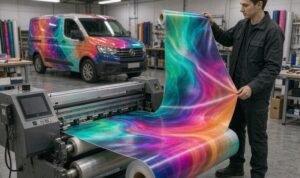
A shop wins a full-colour gradient livery on a customer’s coupe. The print house quotes PVC media, the install goes beautifully, and handover photos look like a magazine cover. Twenty months later the hood has faded, two stone chips have gone through the print to the paint, and the customer wants the wrap off for resale. Stripping two-year-old PVC in a hot climate takes a day and a half because the film has gone brittle and fights back at every panel.
Every one of those outcomes was decided at quote time, by a substrate choice nobody put in the specification. Custom graphics now have two legitimate carriers — printable PVC and printable TPU — and they diverge far more than their per-square-metre prices suggest. If you buy Car Wrap Vinyl for printed work, these are the four numbers to settle before the printer warms up.
The market is moving this way with or without you. TPU printable custom film debuted at FESPA and its co-located WrapFest expo in Barcelona this year, pitched at fleet livery, brand displays and specialty customization, and several colour-change brands now ship print-ready TPU alongside their cast PVC lines. Customers see it, they ask for it, and the shop that cannot explain the difference is quoting on gut feel.
Four numbers that separate printable TPU from PVC
Total thickness, and what reaches the paint
Printable PVC media runs 85 to 115 microns (3.5 to 4.5 mil), plus a cast overlaminate to keep the ink alive. Printable TPU graphics film is a 190 to 215 micron structure with an integral self-healing top coat of 8 to 15 microns. When road gravel arrives — grit of 0.5 to 2 grams at a combined closing speed of 100 to 200 km/h — thin printed PVC punctures straight through to paint. TPU absorbs the same energy, and the swirl marks in its top coat vanish in the sun. Vendors claim roughly four times the puncture resistance of cast TPU over PVC; treat the multiplier as marketing, but the direction is physics, not opinion.
Ink system and stretch compatibility
Cast vinyl works at 30 to 40 percent stretch during installation; printable TPU works at 15 to 25 percent. Both need ink that flexes with the film. Rigid ink micro-cracks once the substrate is pulled past roughly 10 to 15 percent, showing white hairlines exactly where the film got stretched — wrap edges, recesses, bumper corners. Ask the printer which ink chemistry they run on which substrate: flexible eco-solvent, latex or soft UV only, with an ICC profile calibrated to that film’s coating and an ink limit around 240 to 280 percent coverage. A shop that prints TPU with the profile it uses on banner PVC will hand you a crack set at the first recess it touches.
Outdoor life and colour hold
Unlaminated PVC print starts fading within 1 to 1.5 years; a proper cast overlaminate buys 3 to 5. Printable TPU holds 5 to 7 years because its top coat blocks about 99 percent of UV before light ever reaches the ink layer. On horizontal panels in strong sun, printed PVC drifts 3 to 5 ΔE by year two or three; a decent TPU graphics film stays inside 2.5 over five. Benchmarks worth writing into a bid: a colour shift of Δb* 2 or less after 300 to 1,000 hours of ASTM G154 exposure, verified against a retained proof panel. Colour governance after printing is its own discipline — the same reason printed car wrap vinyl fails a brand colour audit when nobody retains reference panels.
Panel orientation matters more than geography. Vertical surfaces see the sun at a grazing angle and hold colour longest; hoods, roofs and boot lids take it straight on, which is why every fade dispute starts on the horizontal panels. A buyer who only inspects the doors is measuring the wrong surface — walk them to the hood before they sign off.
Removal, where the money hides
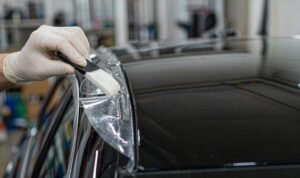
Aged PVC is the expensive half of the story. Past two years in heat, plasticizer loss makes the film brittle; removal needs steam, patience and adhesive chasing with solvents at 4 to 8 hours for a full car — and on some paints the film lifts clear coat on its way off. TPU releases at 50 to 60 degrees C in 1 to 2 hours, clean. If the customer sells the car in year three, that difference alone can erase everything the cheaper media saved at quote time.
Choosing the substrate in five steps
Step 1. Define the job’s real lifespan. Event cars, leases and seasonal looks under two years are PVC territory. Anything the owner expects to keep four years or more is not.
Step 2. Ask the printer for substrate, ink chemistry, ICC profile and ink limit as four separate line items. If they cannot answer, the print is not ready for a curved surface.
Step 3. Run a coupon test. Print a 100 by 100 millimetre coupon, heat it and pull it 15, then 25 percent over a curved form. White hairlines under a raking light end the conversation. Keep the coupon: it doubles as the colour reference for any later dispute about fade, and it costs one square of media.
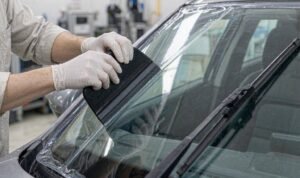
Step 4. Decide the laminate. PVC needs a 2.0 mil cast overlaminate; TPU carries its own top coat. Note that a matte laminate desaturates strong colours by 1.5 to 3 ΔE, so approve the laminated proof, not the raw print.
Step 5. Put removal in the quote: expected hours, temperature window, and who pays if the film takes clear coat with it. A substrate clause beats an apology every time.
| Ask | Why it matters | Acceptable range |
|---|---|---|
| Substrate and total thickness | Puncture behaviour and lifespan | TPU 190-215 µm with top coat; PVC 85-115 µm plus cast laminate |
| Ink chemistry | Cracking on stretched panels | Flexible eco-solvent, latex or soft UV, ICC per film |
| Ink limit | Density without brittleness | 240 to 280 percent coverage |
| Working stretch | Fit over recesses without hairlines | TPU 15 to 25 percent; cast PVC 30 to 40 percent |
| UV endurance | Colour hold on horizontals | ASTM G154 300-1,000 h, Δb* 2 or less |
| Removal window | End-of-life cost, paint condition | TPU releases at 50-60 °C in 1-2 h, clean |
The gradient coupe, two substrates, thirty months
Same coupe, same artwork. Quote A: printed PVC, 85-micron media under a 2.0 mil cast laminate, standard eco-solvent profile, 2,900 dollars. Quote B: printable TPU, flexible eco-solvent ink on a calibrated profile, 4,600 dollars.
At month 24, A’s hood and roof measure 3.2 ΔE against the doors, and two stone chips have carried the print through to paint — 220 dollars of touch-up. The customer decides to sell, so the wrap comes off at month 30: 6.5 hours including adhesive chase, 550 dollars of labour. The five-year spend lands near 6,570 dollars, and the paint underneath is no longer flawless for the next owner.
B’s TPU print measured 0.9 ΔE at month 24. Eleven gravel hits, zero penetrations, and the swirl marks from hand washing faded overnight in the sun. At year four the film is still on the car and the removal conversation has not started. The 1,700-dollar premium at quote time is smaller than any single line item on A’s ledger.
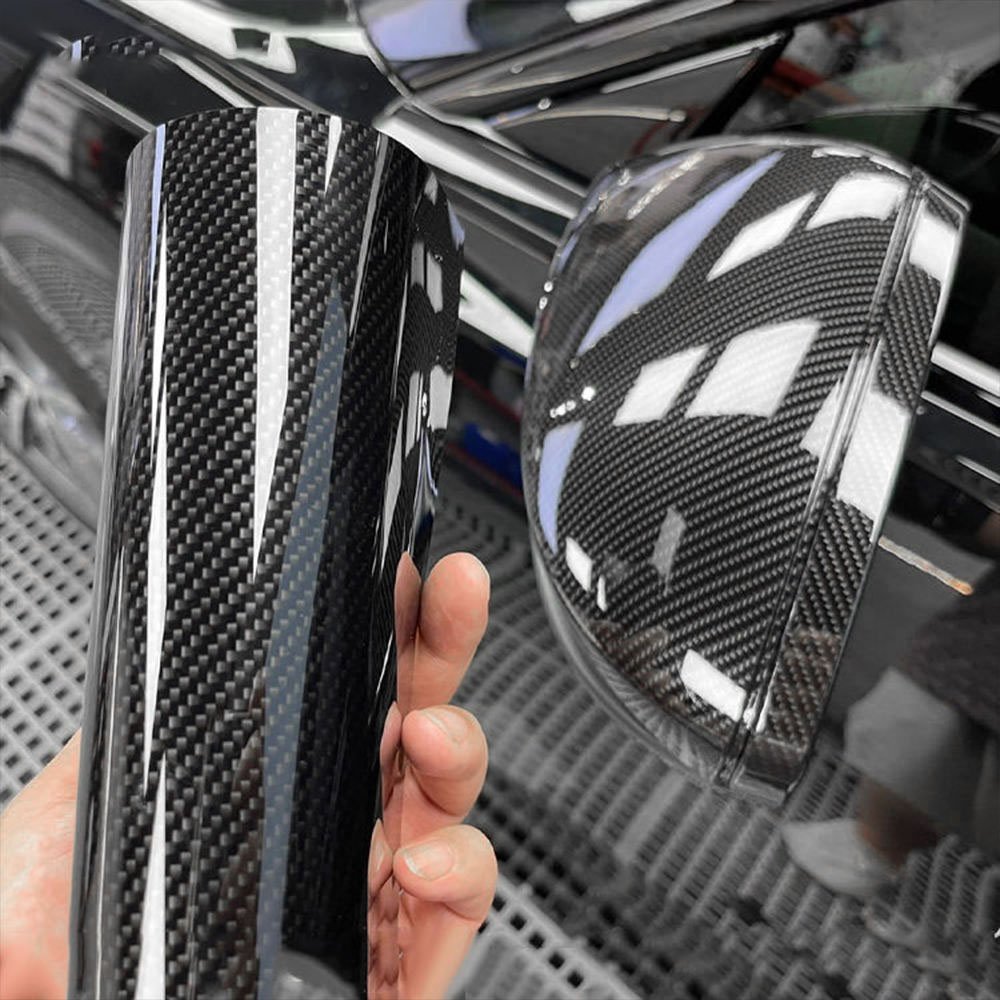
For buyers comparing finished look versus spend, the same logic separates printed media from pigment-in-film options such as Color TPU PPF, where the colour is engineered into the film rather than printed onto it — and where the car film catalogue now covers both routes.
Printed PVC is a legitimate tool for two-year looks and budget-bound builds. For anything a customer expects to keep, printable TPU is the only substrate whose removal day does not reverse the sale.