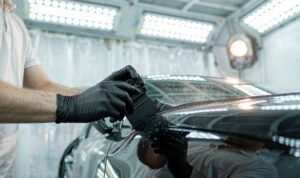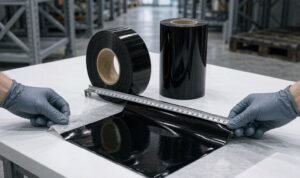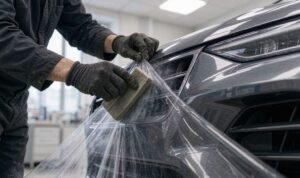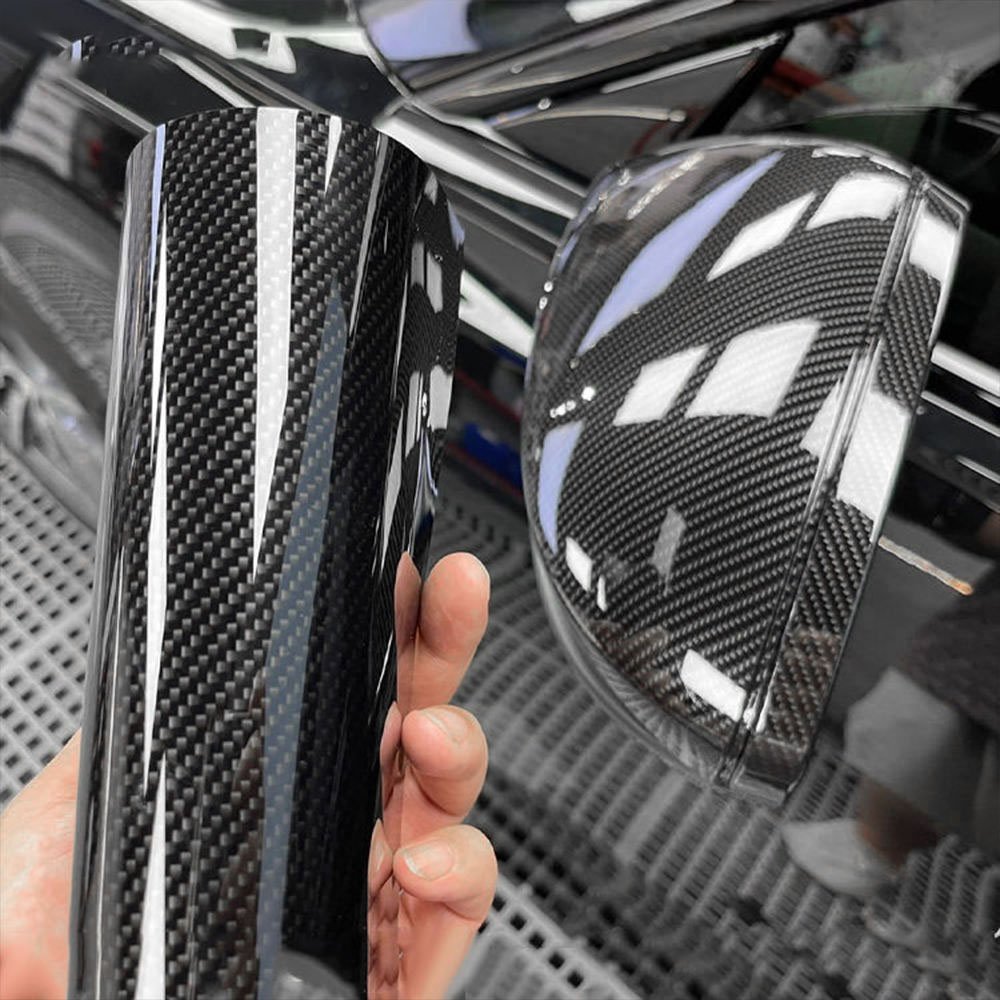
A customer drives back into your bay eighteen months after a matte grey vinyl wrap, and the roof and bonnet now read a full shade warmer than the doors. He wants it fixed under warranty. You check the invoice: the film carries a three-year finish warranty, the vehicle sleeps outside in a high-UV city, and the roof is a horizontal surface — which most manufacturer warranties exclude or derate anyway. You are about to sell him a second wrap for the same car, and the uncomfortable question is whether you should have sold him a different material the first time.
That conversation is happening in shops everywhere in 2026, because the market is quietly moving. TPU-based color films — Color PPF — are taking share from traditional PVC wrap vinyl, not because they look better on day one, but because of what happens in years two through eight. Most suppliers will happily compare gloss levels and price per roll. Almost none will run the five-year cost math for you, because the math sometimes argues against the cheaper roll. Here it is, in four dimensions you can verify.
The four dimensions that decide the money
Dimension 1: Cost per protected year, not cost per install. A quality cast PVC wrap on a sedan typically lands between USD 2,000 and 5,000 installed, and under real outdoor exposure its finish warranty runs 3 to 5 years — often less on horizontal panels, where UV load is highest. A Krāsa TPU PPF install typically runs USD 4,000 to 8,000, with manufacturer warranties in the 8 to 10 year range and UV stability engineered into the aliphatic TPU base rather than the printed layer. Run it out: over a ten-year ownership window, the vinyl path means two or three full installs (material plus 15 to 30 labor hours each), while the TPU path is one. On cost per year of protected, consistent color, the gap between the two options is far smaller than the sticker prices suggest — and in high-UV climates it frequently inverts.
Dimension 2: Color stability you can actually measure. Fading is not an opinion; it is a delta. Color difference is quantified as delta E under ASTM D2244, with accelerated weathering per ASTM G154 or xenon-arc exposure per ASTM G90. A well-made color TPU film holds delta E within roughly 1.5 to 3 points across its rated life, which sits at or below the threshold where the human eye easily distinguishes two adjacent panels. Cast vinyl under sustained sun commonly drifts 3 to 5 delta E points within 2 to 3 years on horizontal surfaces — and because panels fade at different rates, the car stops matching itself. Ask any supplier for delta E retention data and the test standard behind it. If the answer is a photograph, you have your answer.
Dimension 3: Removal cost and paint risk at end of life. Every vinyl wrap ends in a removal job, and removal is where hidden cost lives. Stripping a full sedan takes roughly 4 to 8 labor hours with heat at 60 to 80°C, and aged PVC adhesive is the classic residue-and-ghosting scenario — or worse on repaint or low-bake factory paint. TPU-based film removes in a similar 4 to 7 hour window but tends to come off in larger, cleaner sections, and the top coat carries much less of the adhesive degradation that leaves glue shadows. If you want the full risk checklist for the removal side, we broke down whether removing car wrap vinyl damages paint in an earlier piece. Either way: the removal bill belongs in your five-year math, because every vinyl install buys one.
Dimension 4: Self-healing and daily-wear economics. PVC wrap vinyl has no meaningful self-repair; a scuffed matte finish stays scuffed, and burnishing a shine back into it is a labor charge. TPU color film carries the same elastomer top coat philosophy as clear PPF — light scratches recover with heat, typically starting around 50 to 60°C, meaning sun on a driveway or a warm water rinse erases swirl marks that would be permanent on vinyl. For a shop, that is fewer “the finish looks tired” callbacks; for an owner, it is the difference between a car that looks eight years old on a film and one that looks three.
What to ask before you quote either material
Hand this list to your distributor and watch which rows get answers. The pattern is the data.
| What to ask | Why it matters | Acceptable range |
|---|---|---|
| Outdoor finish warranty, horizontal panels included | Roofs and bonnets fail first; excluded roofs gut the real value | 3-5 yrs vinyl (roof often excluded); 8-10 yrs Color PPF incl. horizontals |
| Delta E retention with test standard (ASTM D2244 / G154 / G90) | Fade is measurable; panels must keep matching each other | Vinyl: 3-5 delta E drift in 2-3 yrs possible; Color PPF: 1.5-3 over rated life |
| Removal time and adhesive residue behavior on aged film | Every vinyl install ends in a paid removal job | 4-8 labor-hours per sedan; minimal residue on quality film |
| Self-healing threshold of top coat | Drives long-term finish condition and callback rate | Scratch recovery from 50-60°C heat exposure |
| Total installed price including expected reinstall cycles | The only number that reflects ten years, not day one | Compare 1 TPU install vs 2-3 vinyl cycles over 10 yrs |
Running the math on a real quote
Step 1: Pull the customer’s real exposure profile. Garaged temperate, outdoor temperate, or high-UV coastal. The vinyl-to-TPU crossover point moves with this: in a garage-kept car in Northern Europe, vinyl’s shorter life matters far less than it does in Dubai, Florida, or Southeast Asia.
Step 2: Build the ten-year table, not the day-one table. Take the installed price, add the expected removal cost at each end of life, add the rewrap at current pricing, and divide by years of consistent color delivered. Use your own labor rate — at USD 60 to 90 per hour for a full removal and 15 to 30 hours per rewrap, the vinyl cycle adds USD 900 to 2,700 in labor alone each round.
Step 3: Price the failure cases. What does a delaminating edge, a ghosted adhesive shadow on repaint, or a two-tone fade job cost you in goodwill? One absorbed rework on a premium client can erase the entire material saving of the cheaper roll.
Step 4: Segment your menu. Keep cast Auto Wrap Vinyl for short-cycle work: event cars, fleet campaigns, budget builds where the customer accepts a 3 to 5 year horizon and wants the widest color catalog at the lowest entry price. Steer long-horizon owners — and anyone parking outdoors in strong sun — toward color TPU. The catalogs now overlap enough in finishes that you rarely lose the sale on look.
Step 5: Present both quotes with the decade in writing. Show the customer the two lines: one install versus the likely two, with removal labor itemized. Customers who see the ten-year table overwhelmingly pick the option that protects your margin, because it is also the honest one.
A worked example from a shop that made the switch: a Porsche Macan owner was quoted USD 3,400 for a satin grey cast vinyl wrap and USD 6,900 for a satin Color PPF in the same finish family. The shop showed both ten-year projections. The vinyl path: install, plus an expected removal and rewrap around year 4 at USD 3,600, plus another at year 8 — roughly USD 10,600 and 6.5 days of bay time over a decade, with delta E drift above 3 expected on the roof by year 3. The TPU path: one install, warranty to year 10, delta E held under 2 in the supplier’s accelerated data. The customer took the TPU quote, and the shop booked the same bay hours for two new customers instead of a redo. Per protected year, the vinyl quote was actually the expensive one.
The verdict worth stating out loud
The 2026 market is not killing vinyl wrap — cast film still owns short cycles, huge color catalogs, and printed work, and comliker.com stocks both worlds for a reason. But every shop still selling color change purely on day-one price is competing on the only axis where vinyl wins, and losing money on the axes that decide renewals: fade, removal, and rework. Run the five-year table for every color-change customer who parks outside. The material that survives that conversation is usually the one that also survives the decade — and that is exactly why Color PPF keeps taking share from wrap vinyl.