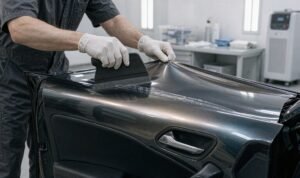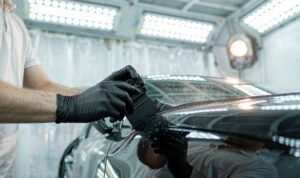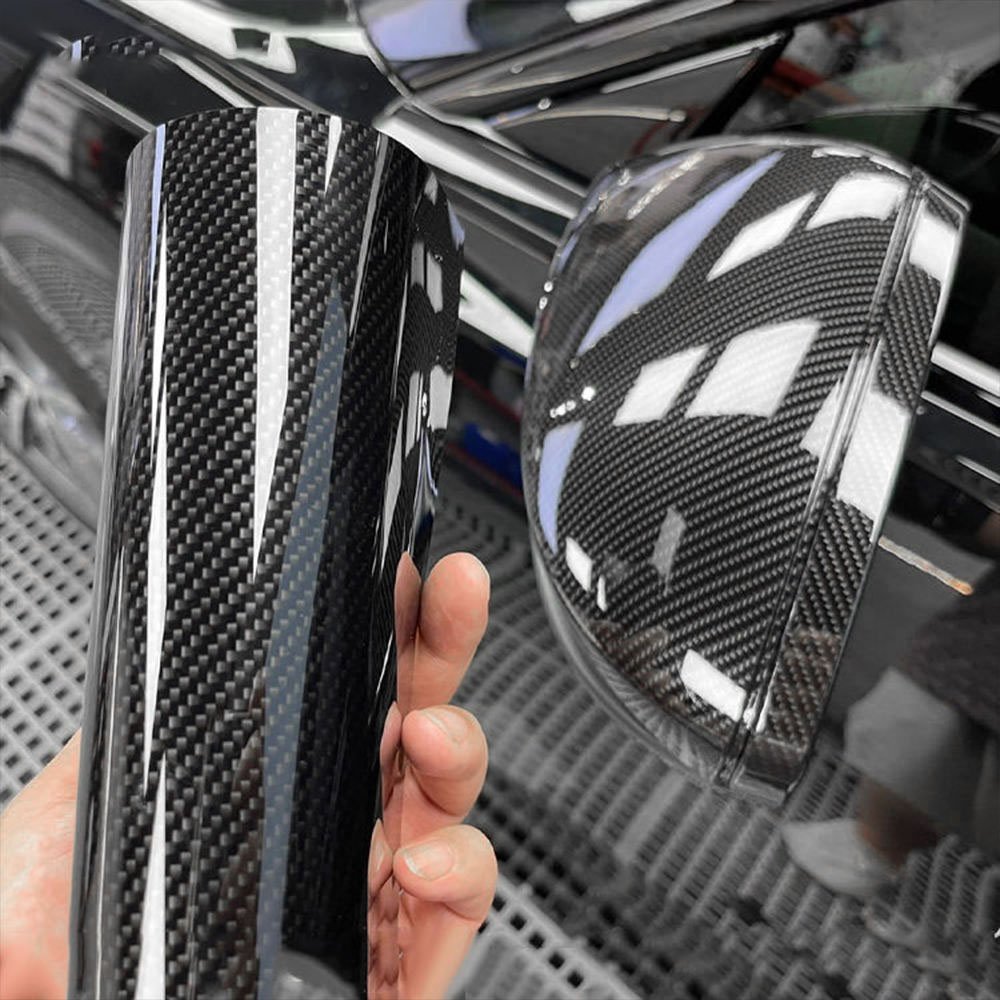
A wrap shop quoted a customer a gloss color-change job in a 200-micron TPU color film, then handed the install to a crew that had only ever laid wet-apply material. Three hours in, the hood had two visible dry spots where the slip solution had evaporated before the squeegee got there, and the fender edges would not sit down because the installer was stretching the film the way he stretched vinyl. The job shipped a day late after two panel re-dos. Nothing was wrong with the film. The application method and the film were simply mismatched — and nobody on the crew had been taught the difference.
That story is becoming more common, because color PPF has moved from novelty to a real product line. The UK just saw one of the biggest protective color-change launches of 2026: Cheetah PCC, a 200-micron TPU color film distributed exclusively through William Smith, built around a patent-pending dry-apply system with air-release channels and an install claimed up to 25 percent faster than standard vinyl or wet-applied color PPF. Meanwhile, plenty of workshops still run traditional wet-apply color films and do excellent work with them. So which method should your shop stock, and what should you verify before you commit? We covered the five-year ownership math between the two categories in our color PPF versus vinyl wrap cost breakdown; this piece stays on the installation side, where the money actually leaks.
Dimension one: construction and thickness
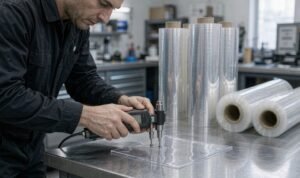
A Color TPU PPF in the current protective class runs about 190 to 215 microns total (200-micron nominal) — roughly double the 90 to 130 microns of a typical cast or calendered Car Wrap Vinyl. That thickness is why color PPF actually stops stone chips instead of just hiding paint, and it is measured the same way any film is: ASTM D374, with a tolerance a serious manufacturer holds within about plus or minus 10 percent.
Thickness changes handling, though. A 200-micron film does not drape into deep recesses as easily as a 110-micron vinyl, so panel selection and edge planning matter more, and the installer needs heat to set memory rather than raw stretch. It also changes what you should check at receiving: measure five points per roll with a thickness gauge, across and along the web, and reject any roll under about 180 microns or any spread wider than the stated tolerance. On a film sold largely on the promise of chip protection, thickness is the promise.
Dimension two: application method and clock time
Wet-apply means slip solution, floating the film into position, and working out every drop of fluid. It is forgiving on positioning — you can slide the film for minutes — but every panel has to be fully de-watered, and any dry spot left under the film becomes a permanent mark. Full cure and tack-down typically run 24 to 48 hours before the car should see rain or a wash.
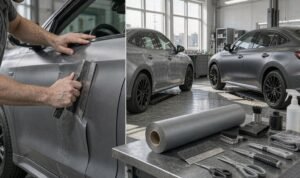
Dry-apply uses engineered air-release channels to bleed out air instead of fluid. There is no drying stage, so the clock savings are real: the up-to-25-percent-faster install claim on the new UK launch matches what installers have reported on dry systems generally. The trade-off is less forgiveness — on a dry system, a piece of dust is a raised pimple you cannot flush out. Dry-apply rewards shops with genuinely clean bays and punishes everyone else.
Dimension three: stretch behavior
This is where vinyl habits actively hurt. Color TPU film carries pigment and effect layers that distort visibly when over-stretched: gloss metallics show grain swirl, satins go patchy. The working stretch window for a 200-micron color PPF is realistically 15 to 25 percent, against the 30 to 40 percent a cast vinyl will tolerate before whitening. Past that window the color itself is compromised, not just the film shape. Heat-assisted forming at 45 to 60 degrees Celsius, with post-heating of edges at 90 to 100 degrees Celsius, does the work that stretching does on vinyl.
Dimension four: finish durability and self-healing
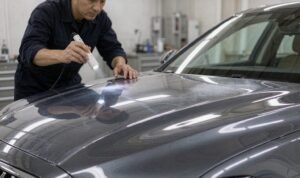
Both categories of color film carry a clear topcoat, but the TPU construction adds self-healing: light swirls and scuffs reflow at moderate heat, and stain resistance over a dark gloss finish is a level above most vinyls. The relevant verification is the heal activation temperature and what the heal does not cover — deep cuts and impacts through the film stay healed-out of the promise. Also confirm the warranty applies to the specific color series; several manufacturers warranty their clear line differently from their colored line.
| What to ask the supplier | Why it matters | Acceptable range or proof |
|---|---|---|
| Supported application method(s) | Wet and dry systems need different skills and bays | Written confirmation: wet, dry, or both, per color series |
| Total thickness and tolerance, per ASTM D374 | Thickness is the difference between protection and decoration | 190–215 µm nominal, tolerance ±10% |
| Working stretch limit before color distortion | Over-stretch ruins the finish, not just the fit | 15–25% working stretch; heat-form 45–60°C; post-heat edges 90–100°C |
| Self-heal activation and exclusions | Sets customer expectations and prevents disputes | Heal at moderate heat; deep cuts and punctures excluded |
| Warranty on the exact color line | Colored series are often warranted separately from clear | Named series, duration, and claim documentation in writing |
How to actually run the decision
Step 1: audit your environment first, not the film. Dry-apply demands a bay that meets your dust standard — if your current wet process leaves visible contamination, a dry system will make it worse, not better.
Step 2: split the job by panel geometry. Large flat and gently curved panels (doors, hoods, roofs) are where dry-apply saves the most clock time. Deep concave surfaces and complex bumpers stay faster and safer wet, or with heat-assisted dry technique once the crew is trained. On a full changeover, the protection-per-dollar argument that justifies any paint protection film purchase only holds if the finish is installed without distortion in the first place.
Step 3: retrain the hands. The two habits that transfer badly from vinyl are stretch amount and squeegee pressure. Run crew practice on scrap panels with actual production film — a full hood and a full bumper per installer — before the first paying job. Pay attention to edge handling specifically: color film shows a lifted or gapped edge far more obviously than clear film does, because there is no paint color underneath to visually absorb the line. Post-heat every finished edge at 90 to 100 degrees Celsius for ten to fifteen seconds per 100 millimetres, the same discipline clear PPF demands, and treat it as part of the install rather than an optional finish.
Step 4: quote with the method in mind. If you run dry-apply on the flat panels and wet on the complex ones, price the job per panel mix, not per vehicle. On a full-body color change, the wet-method shop in our opening story spent 3.5 hours on the front-end assembly and needed two re-dos; a dry-system crew on the same panels works in the 2.5 hour range with no drying stage — roughly the 25 percent clock difference the new UK launch advertises, plus a day of schedule risk removed.
Step 5: document the film, the method, and the batch. Color-match replacements years from now depend on records, and any warranty claim will start with the batch code and install date.
The bottom line
Dry-apply color PPF is not a better product than wet — it is a different production system, and the shops that win with it are the ones whose cleanliness and crew training were already good enough to not need the forgiveness that wet application provides.