The November job that went gray
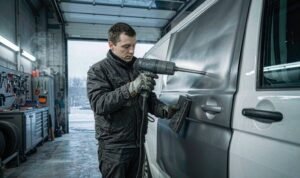
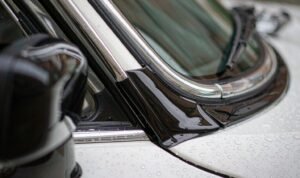
A detailing shop wrapped a fleet van in matte gray vinyl during the last week of November, in a bay with no heating. The film felt stiff from the first panel, the adhesive barely wet out, and the installer leaned harder on the squeegee to compensate. The van looked acceptable at delivery, and the customer drove it into a wet, freezing month. Three weeks later the shop got the call: gray blotches under the film at the door handle cups, lifting along the bumper recesses, and a matte finish that suddenly looked uneven in low light.
Nothing was wrong with that roll of Car Wrap Vinyl on paper. What failed was the environment: an unheated bay, cold panels sitting near the dew point overnight, and an adhesive that never got the temperature it needs to flow and grip. Winter is when wrap shops quietly lose money, because cold-weather callbacks rarely show up before the invoice is paid. These are the numbers that keep a December install alive to see spring.
Four numbers that decide whether a winter wrap survives
Shop ambient temperature
Cast vinyl adhesive is pressure sensitive and formulated to flow at room temperature. The comfortable working floor most manufacturers publish is 18 to 26 degrees Celsius, and things get risky fast below 15: wet-out slows dramatically, the film stiffens, and its elongation behavior, the property tested under ASTM D882, works against you instead of for you. Below about 10 degrees a cast film behaves like a stiff plastic sheet with memory, and every recess you force it into becomes tension that will pull the film back out within weeks. If your bay drops under 15 in winter, the honest fix is heating, not technique.
Panel temperature and the dew point gap
Ambient temperature is only half the story. Steel and glass panels in an unheated building sit colder than the air, sometimes 5 degrees or more, and a panel at or below the dew point carries an invisible film of condensation right where the adhesive needs to bond. The working rule: the panel surface must be at least 3 degrees Celsius above the current dew point before film touches it. An infrared thermometer plus a cheap hygrometer answers this in seconds, and skipping the check on a cold morning is how invisible moisture ends up trapped at the bond line.
Humidity and flash-off
Most film makers specify roughly 40 to 60 percent relative humidity for installation. Cold air holds less moisture, so a heated shop in winter often runs drier than that, which is usually fine, but a damp cold shop combines the worst of both: slow solvent and moisture flash-off, adhesive that stays milky longer, and haze that shows worst on matte and satin finishes, where the surface scatters light and hides nothing.
Post-heat discipline when the bay is cold
Stretched zones still need post-heating to 90 to 105 degrees Celsius, verified on the film surface with an infrared thermometer. Cold bays make this harder, not easier: a panel bleeds heat into the metal behind it, so a zone that hit 95 degrees can fall below 80 within seconds. Work smaller zones, heat slightly longer, and verify immediately rather than heating a whole panel and hoping. If the shop thermometer reads 12 degrees, assume every post-heat number you were trained on needs extra attention.
The winter checklist to demand from any installer
| Ask in winter | Why it matters | Acceptable range |
|---|---|---|
| Heated bay temperature | Adhesive flow and film flexibility depend on it | 18 to 26 C, hard floor around 15 C |
| Panel temperature versus dew point | Condensation at the bond line kills adhesion invisibly | Panel at least 3 C above dew point |
| Relative humidity | Slow flash-off traps moisture under the film | 40 to 60 percent RH |
| Post-heat verification | Cold panels bleed heat; by-feel heating fails in winter | 90 to 105 C on film surface, IR verified |
| Film acclimatization | Roll film stored cold needs to equalize before install | 12 to 24 hours at shop temperature before unboxing |
A winter install protocol that holds up
Step 1. Heat the bay before the vehicle, not after. Get the shop to 18 degrees or better overnight so panels, floor, and air reach the same temperature. A space heater running for two hours warms the air and leaves the chassis cold, which is exactly the trap the dew point rule exists for.
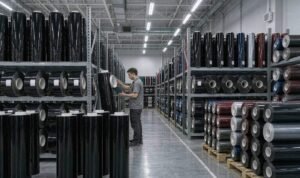
Step 2. Bring the film inside early. Roll film stored in a cold warehouse or van needs 12 to 24 hours at room temperature before installation, and the same storage discipline that protects shelf life, moderate temperature and humidity, applies once the roll reaches your shop, as we covered in our piece on how wrap vinyl ages in storage before it ever touches a car. Cold film is stiff film, and stiff film is where overstretching starts.
Step 3. Measure the panel, not the room. IR thermometer on the actual panel, hygrometer for the air, and confirm that 3-degree gap over the dew point. Recheck in the afternoon, because a bay that was fine at 9 a.m. can drop below the line by dusk.
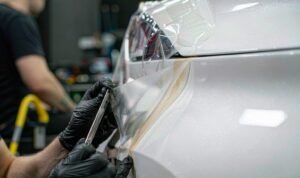
Step 4. Slow down and shrink your zones. Wet-out takes longer, squeegee pressure transfers differently on cold film, and recesses need more relief cuts instead of more muscle. A cast vinyl pushed past roughly 25 percent stretch on a panel face, or forced 40 percent into a bumper recess without cuts, carries tension it will release by March.
Step 5. Post-heat smaller, verify immediately, and extend the cure handover. Tell the customer to keep the car out of pressure washes for at least the first week and to expect a slightly longer initial adhesion build in cold weather. Underheated, unverified post-heat is the single most common cause of shrink-back callbacks from winter installs.
The economics show up fast. The same fleet program split across two bays in the same city tells the story: the heated shop running 22 degrees finished each van with normal wet-out time and zero callbacks across the season, while the 11-degree unheated bay took noticeably longer per panel, saw gray haze in its matte films, and rewrapped two vans’ worth of recesses at an estimated cost of several thousand dollars in material and labor it could not bill. A winter gas bill, measured against one rewrapped van, is not a close call.
Winter is a materials problem, not a moral one
Shops treat cold-weather failures as a skill issue, which is half wrong and wasteful. The material genuinely changes behavior below its working window, and no amount of technique substitutes for a heated bay, a dew point check, and verified post-heat. The same logic extends across film families: whether your inventory is cast wrap stock, مادة TPU PPF الملونة for paint-toned protection, or entry-level فيلم TPH PPF for short-term jobs, every adhesive layer expects the same basic temperature conditions to bond. If you source فينيل تغليف السيارة at wholesale, ask suppliers what their stated minimum application temperature is, compare it against the فيلم السيارة categories you already stock, and build your winter schedule around it, because a shop that installs to the material’s numbers instead of the calendar’s keeps its callbacks down when competitors are quietly eating rework. Cold weather does not forgive wishful thinking, and it does not have to cost you anything either.