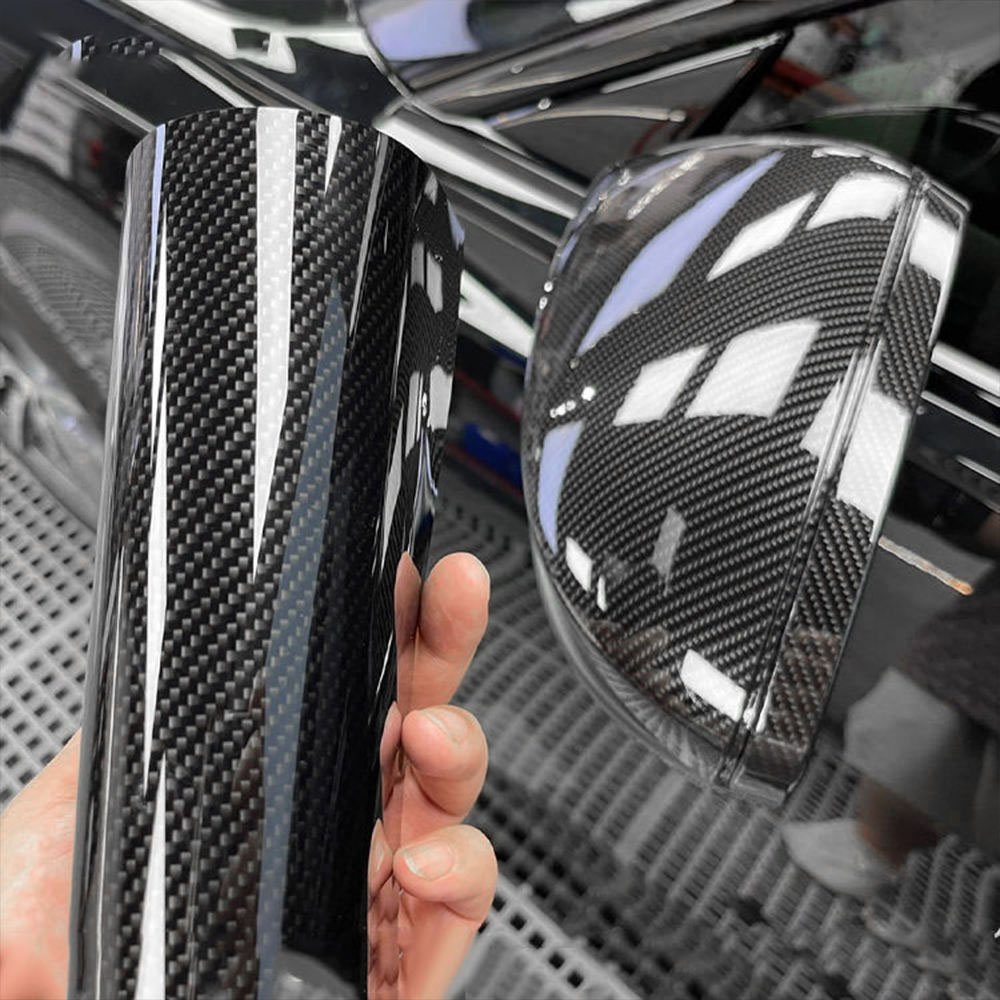
Let me explain the difference between TPU and PPF to you clearly. Simply put, TPU is the material, PPF is the product, one is like “fabric”, and the other is like “clothing”.
1. Material and Structure
TPU (thermoplastic polyurethane): It is an elastic material that is soft and has good ductility. It can stretch up to 500% without breaking, and its thickness is usually only 0.2 millimeters.
PPF (Филм за защита на боята): It is a high-performance environmentally friendly film composed of multiple layers of film, including TPU substrate and anti fouling coating, with a thickness generally ranging from 6.5-8.5 mil (about 0.16-0.22 mm).
2. Performance characteristics
TPU:
Good elasticity: able to fit complex surfaces, such as car door edges and rearview mirrors.
Self repair: The coating can automatically repair minor scratches when exposed to heat (such as sunlight).
Weather resistance: UV resistance, chemical corrosion resistance, suitable for long-term use.
PPF:
Comprehensive protection: able to resist external damage such as stone splashing and tree branch scratching.
High/Low Temperature Resistance: Resistant to high temperatures up to 150 ℃ and low temperatures up to -80 ℃, suitable for extreme environments.
Anti yellowing: It is not easy to yellow after long-term use, keeping the car body bright.
3. Purpose and Applicable Scenarios
TPU: Suitable for key protection in specific areas, such as car door edges, rearview mirrors, and other easily scratched parts.
PPF: Suitable for full car film application, providing all-round protection, especially suitable for luxury cars or frequently driven vehicles.
4. How to choose?
Choose TPU: If you pursue automatic scratch repair, soft texture, or need to protect complex surfaces.
Choose PPF: If more emphasis is placed on impact resistance, durability, or if full vehicle protection is required.
Summary: TPU and PPF each have their own advantages, just choose according to your needs and budget. If you have any specific questions, feel free to ask me anytime!